
Every CISO across Latin America is heading into the same season: budget planning. And every year, the same problem shows up — security leaders are asked to justify spend without always having a clear, current picture of where the organization is actually exposed. Before Q1 2027 budget conversations begin, a proper cybersecurity risk assessment is the single most useful tool a CISO can bring into the room.
A cybersecurity risk assessment does more than produce a report to file away. Done well, it becomes the evidence base for every major security decision in the year ahead — from headcount requests to tool consolidation to board-level risk conversations.
Why the Timing Matters: Q1 2027 Planning Cycle
Budget cycles across LATAM enterprises typically lock in during the final months of the year, which means the window to influence Q1 2027 planning is closing faster than most security teams realize. A cybersecurity risk assessment completed now gives CISOs hard data to bring into planning conversations, rather than relying on last year’s assumptions or anecdotal incident reports.
Waiting until Q1 itself is already underway to run a cybersecurity risk assessment puts CISOs in a reactive position — trying to secure emergency budget for issues that could have been flagged, prioritized, and funded months earlier through the normal planning process.
What a Proper Cybersecurity Risk Assessment Actually Covers

Not all assessments are created equal. A thorough cybersecurity risk assessment should go well beyond a basic vulnerability scan and give leadership a genuinely usable picture of organizational risk.
- Attack surface mapping — identifying every system, application, and endpoint that could be a point of entry.
- Access control review — evaluating who has access to what, and whether that access is still appropriate.
- Third-party and vendor risk — assessing exposure introduced through partners, contractors, and supply chain connections.
- Incident response readiness — testing whether the organization could actually detect and respond to a real cyberattack today.
- Regulatory and compliance gaps — flagging where the organization falls short of data protection requirements in its specific markets.
Dogma Systems C3X LLC’s free cybersecurity risk assessment is built around exactly this scope, giving CISOs a clear, prioritized view of risk rather than a generic checklist.
| Walk into Q1 2027 planning with real data.
Request your free cybersecurity risk assessment from Dogma Systems C3X LLC before your budget cycle locks in. |
What LATAM CISOs Should Prioritize This Cycle
1. Move From Reactive to Predictive Spending
A cybersecurity risk assessment gives CISOs the ability to request budget for what is likely to happen, not just what already has. Boards respond far better to a prioritized risk list backed by data than to a general request for “more security budget.”
2. Address the Human Layer, Not Just the Technical One
Every recent cybersecurity risk assessment across the region tells a similar story: technical controls have improved faster than employee awareness. Phishing simulations, targeted training, and clear escalation paths often deliver more risk reduction per dollar than another technical tool layered on top of an already complex stack.
3. Revisit Vendor and Third-Party Access
As companies expand their partner ecosystems, third-party access quietly becomes one of the largest unmanaged risk categories. A cybersecurity risk assessment should always include a fresh look at which vendors still have active access to internal systems and whether that access is still justified.
Common Gaps a Cybersecurity Risk Assessment Uncovers
- Across hundreds of assessments conducted for LATAM businesses, a few gaps show up again and again:
- Multi-factor authentication enabled for some systems but not consistently enforced across the organization.
- Backup systems that exist but have never been tested through an actual recovery drill.
- Former employees or contractors who still have active system credentials months after departure.
- Incident response plans that exist on paper but were never rehearsed with the actual team.
These findings rarely surprise a CISO once they see them written down — but without a structured cybersecurity risk assessment, they tend to stay invisible until something goes wrong. Solutions like SecureMind are designed to close these gaps with continuous monitoring, rather than relying on a once-a-year snapshot.
| Not sure where your organization’s biggest gaps are?
Explore how Dogma Systems C3X LLC’s cybersecurity programs turn assessment findings into action. See our cybersecurity solutions. |
Building the Business Case With Assessment Data
A cybersecurity risk assessment is only as valuable as what happens with the results. The most effective CISOs turn assessment findings into a clear, tiered business case: critical risks that need immediate funding, medium-term risks that can be phased into next year’s roadmap, and lower-priority items that can be monitored without immediate spend.
This tiered approach makes it far easier for finance and executive leadership to understand why certain investments cannot wait until later quarters, while also showing that the CISO is being deliberate and cost-conscious rather than requesting unlimited budget across the board.
Regional Context Still Matters
Risk profiles vary significantly across the LATAM markets Dogma Systems C3X LLC serves, and a cybersecurity risk assessment should reflect that. A financial services company in Mexico faces different regulatory pressure than a retail company in Chile or a healthcare provider in Puerto Rico. Reviewing industry-specific risk factors alongside a cybersecurity risk assessment ensures the resulting roadmap reflects the actual threats the organization faces, not a generic global template.
A Pre-Q1 2027 Checklist for CISOs
Schedule or complete a full cybersecurity risk assessment before your budget cycle finalizes.
- Rank findings by business impact, not just technical severity.
- Translate top risks into a clear, tiered funding request that finance and the board can follow.
- Review third-party and vendor access as part of the assessment, not as a separate exercise.
- Confirm incident response plans have been tested within the last 12 months.
- Bring assessment data — not assumptions — into every planning conversation.
How Board Members and Finance Teams View Risk Assessment Data
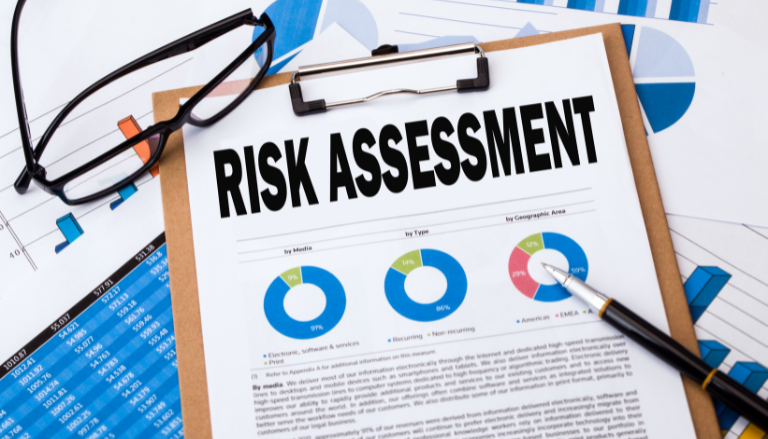
Boards and CFOs are not security specialists, and they do not need to be — but they do need a clear reason to approve spend. A cybersecurity risk assessment translates technical findings into business language: financial exposure, regulatory penalties, customer trust impact, and operational downtime. When a CISO presents findings this way, the conversation shifts from “why do you need this budget” to “how quickly can we fund it.”
This is especially important heading into Q1 2027, as many LATAM boards are increasingly asking security leaders to quantify risk in financial terms rather than technical severity scores. A well-structured cybersecurity risk assessment gives CISOs the vocabulary and data to meet that expectation directly, rather than being caught off guard in the boardroom.
Avoiding the Most Common Mistake: Treating It as a One-Time Event
The biggest mistake organizations make is treating a cybersecurity risk assessment as a single project rather than an ongoing discipline. Threats evolve constantly, new employees and vendors are onboarded throughout the year, and systems change faster than annual reviews can keep up with. CISOs who build a rhythm of shorter, more frequent assessments — rather than one large exercise every 12 months — tend to walk into each planning cycle with far more confidence and far fewer surprises.
This does not mean every assessment needs to be exhaustive. A full cybersecurity risk assessment once a year, supplemented by lighter, targeted reviews after major system changes or new vendor onboarding, strikes the right balance between thoroughness and practicality for most LATAM organizations.
What Sets a Strong Assessment Partner Apart
Not every provider that offers a cybersecurity risk assessment delivers the same value. Some produce long, generic reports full of technical jargon that never make it past the IT department. The assessments that actually change budget conversations share a few common traits: they prioritize findings by real business impact, they translate technical risk into language executives understand, and they come with a clear, actionable roadmap rather than just a list of problems.
CISOs evaluating potential partners for a cybersecurity risk assessment should ask direct questions: Will findings be prioritized by business impact or just technical severity? Will the report include a realistic implementation roadmap? Is there support translating results for non-technical stakeholders like the board and finance team? The answers to these questions often matter more than the specific tools or methodology used to run the assessment itself.
Frequently Asked Questions
What is included in a cybersecurity risk assessment?
A thorough cybersecurity risk assessment typically covers attack surface mapping, access control review, third-party risk, incident response readiness, and regulatory compliance gaps, giving leadership a prioritized view of where the organization is most exposed.
Why should CISOs complete an assessment before Q1 2027?
Budget cycles for many LATAM enterprises lock in during the final months of the year. Completing a cybersecurity risk assessment before that window closes gives CISOs the data needed to secure the right funding rather than requesting emergency budget later.
Is the cybersecurity risk assessment really free?
Yes. Dogma Systems C3X LLC offers a free cybersecurity risk assessment as a starting point for organizations that want a clear picture of their current exposure before committing to any paid services.
How often should a cybersecurity risk assessment be repeated?
At least annually, and ideally more frequently for organizations undergoing rapid growth, market expansion, or significant changes to their technology stack, since risk profiles shift quickly in fast-moving businesses.
Conclusion
CISOs who walk into Q1 2027 planning with a completed cybersecurity risk assessment in hand are simply better positioned — with clearer priorities, stronger justification for budget, and fewer surprises later in the year. Dogma Systems C3X LLC works with security leaders across Latin America to turn assessment findings into practical, funded roadmaps rather than reports that sit unused.
| Don’t wait until Q1 2027 to find out where you’re exposed.
Reach out to Dogma Systems C3X LLC today: Contact us, or find us on Google Business Profile: Dogma Systems C3X LLC on Google. |