
Cybersecurity Consulting Reduces Risk by helping organizations identify vulnerabilities, reduce exposure to threats, and implement structured security controls before incidents occur. For companies operating in the United States, cyber risks now represent both a technical and operational challenge that can disrupt revenue, compliance, and customer trust.
For Dogma Systems, cybersecurity consulting focuses on reducing uncertainty around digital threats while enabling businesses to operate securely and confidently. Rather than reacting to breaches, consulting-based cybersecurity emphasizes prevention, governance, and continuous improvement.
Understanding Cybersecurity Risk in Today’s Business Environment
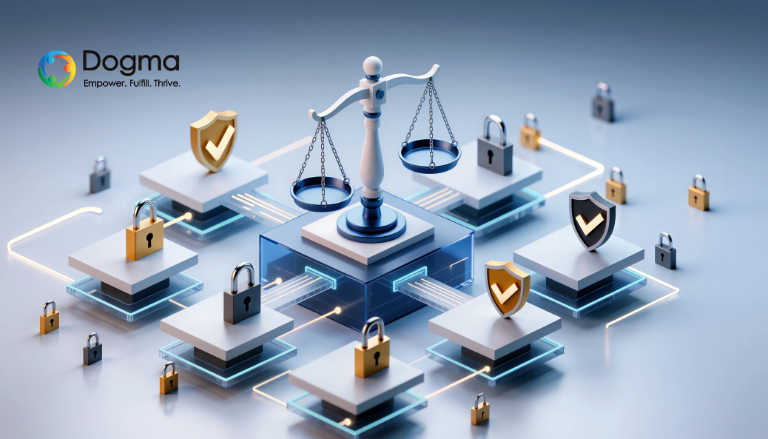
Cybersecurity risk refers to the potential for financial loss, operational disruption, legal exposure, or reputational damage resulting from cyber incidents. These risks affect organizations of all sizes, including professional services firms, manufacturers, healthcare providers, and technology companies.
Common sources of cybersecurity risk include:
- Phishing and social engineering attacks
- Ransomware and malware infections
- Misconfigured cloud systems
- Insider threats and human error
- Third-party and supply chain vulnerabilities
Cybersecurity consulting addresses these risks through structured assessment and planning rather than ad hoc security fixes.
What Cybersecurity Consulting Involves
Cybersecurity consulting is a professional service that evaluates an organization’s security posture and recommends controls aligned with business objectives and regulatory requirements. Unlike general IT support, cybersecurity consulting focuses specifically on risk reduction and resilience.
Key components typically include:
- Risk assessments and gap analysis
- Security architecture review
- Policy and governance development
- Compliance alignment
- Incident response planning
These services form the foundation for how cybersecurity consulting reduces risk across technical, operational, and human factors.
How Cybersecurity Consulting Reduces Risk
Risk Identification and Prioritization
One of the most direct ways cybersecurity consulting reduces risk is by identifying vulnerabilities that internal teams may overlook. Consultants evaluate systems, workflows, and access controls to determine where the highest risks exist.
This process helps organizations:
- Focus resources on high-impact risks
- Avoid unnecessary security spending
- Address weaknesses before exploitation
Prioritization ensures that security efforts align with real-world threat exposure.
Improved Security Architecture and Controls
Cybersecurity consultants assess how systems are designed and interconnected. Weak architecture often increases attack surfaces and creates single points of failure.
Consulting-driven improvements may include:
- Network segmentation
- Secure access controls
- Endpoint protection strategies
- Cloud security configuration
By strengthening architecture, cybersecurity consulting reduces risk at the infrastructure level.
Compliance and Regulatory Risk Reduction
Many industries face regulatory requirements related to data protection and cybersecurity. Failure to comply can result in fines, audits, and loss of contracts.
Cybersecurity consulting helps reduce compliance risk by:
- Mapping controls to regulatory frameworks
- Documenting policies and procedures
- Supporting audit readiness
Authoritative frameworks from organizations such as the Cybersecurity and Infrastructure Security Agency and the National Institute of Standards and Technology often guide these efforts.
Read it also:- Cybersecurity Consulting Firm Building Stronger Cyber Resilience
Reducing Human Risk Through Training and Governance

Human error remains one of the leading causes of cybersecurity incidents. Consulting services address this risk by integrating security awareness into daily operations.
Effective consulting-led governance includes:
- Security policies and acceptable-use standards
- Role-based access management
- Employee security awareness programs
By addressing behavior and process, cybersecurity consulting reduces risk beyond technology alone.
Industry-Specific Risk Mitigation
Different industries face different threat profiles. Cybersecurity consulting adapts controls based on business models, data sensitivity, and operational requirements.
Organizations can align security strategies with their operational context by referencing industries served to ensure controls remain practical and effective. This approach reduces risk without creating unnecessary friction.
The Role of Cybersecurity Products and Tools
Technology alone does not eliminate cyber risk, but properly selected tools play a critical role in protecting systems while supporting a positive customer experience. Cybersecurity consulting evaluates which solutions fit an organization’s environment rather than relying on generic toolsets. Solutions may include:
- Threat detection platforms
- Endpoint security tools
- Identity and access management
- Continuous monitoring systems
When aligned with strategy, tools such as those outlined in cybersecurity solutions support long-term risk reduction.
Proactive Incident Response Planning
Cybersecurity consulting reduces business impact by preparing organizations for incidents before they occur. At Dogma Systems, incident response planning minimizes downtime, confusion, and financial loss during a cyber event through structured, tested response frameworks.
Consultants help define:
- Roles and responsibilities
- Communication protocols
- Containment and recovery steps
Prepared organizations experience faster recovery and reduced business impact.
Strategic Value Beyond Immediate Risk Reduction
Cybersecurity consulting does more than prevent attacks. It supports business continuity, protects brand reputation, and enables growth by reducing uncertainty.
Long-term benefits include:
- Increased stakeholder confidence
- Improved vendor and partner trust
- Better decision-making around technology investments
These outcomes demonstrate how cybersecurity consulting reduces risk while supporting strategic objectives
Cybersecurity Consulting Reduces Risk by helping businesses identify vulnerabilities and strengthen defenses before threats escalate, which enhances overall digital trust and reputation. When paired with an optimized Google Business Profile presence, companies demonstrate credibility both online and in security posture. This comprehensive approach not only protects data but also builds customer confidence in today’s competitive landscape.
FAQs: Cybersecurity Consulting Reduces Risk
Q1 How does cybersecurity consulting reduce risk for small businesses?
Cybersecurity consulting reduces risk by identifying vulnerabilities that small businesses often lack resources to detect internally. Structured assessments and clear remediation plans help prevent costly incidents before they occur.
Q2 Is cybersecurity consulting cost-effective compared to reactive security fixes?
Yes, cybersecurity consulting reduces risk by preventing breaches that are significantly more expensive than proactive planning. The cost of consulting is typically lower than recovery from ransomware or data loss.
Q3 How quickly can cybersecurity consulting reduce risk?
Initial risk reduction can occur within weeks through assessments and configuration changes. Long-term risk reduction continues as policies, controls, and monitoring mature.
Q4 Does cybersecurity consulting reduce compliance risk?
Cybersecurity consulting reduces risk by aligning security controls with regulatory requirements. This approach lowers the likelihood of fines, failed audits, and contractual penalties.
Q5 Can cybersecurity consulting reduce risk from employee errors?
Yes, cybersecurity consulting reduces risk by addressing governance, access controls, and security awareness. These measures significantly reduce incidents caused by phishing and misuse.
- Cybersecurity consulting reduces risk by identifying vulnerabilities early
- Structured assessments enable focused, cost-effective security improvements
- Governance and training address human-related risks
- Industry-specific strategies improve effectiveness
- Proactive planning reduces financial and operational impact
Building a Resilient Security Strategy
Businesses seeking long-term protection benefit from professional guidance that aligns security with operational goals. If your organization needs help understanding how cybersecurity consulting reduces risk or wants to strengthen its overall security posture, reviewing available insights in Dogma Systems resources can provide additional clarity.
For organizations ready to take the next step, professional support can help translate security strategy into practical action. To discuss cybersecurity planning or request assistance, you can contact Dogma Systems directly at 13026142490 or explore tailored consulting options through their website.